top of page
© 2026
The Class Project That Became A $100k CPG Brand
Overview
I started Minimal Snacks as part of an entrepreneurship class assignment. After the class ended, I kept building. We scaled to $100k+ GOV and got acquired in 2025.
They say starting a company is like staring into the abyss and chewing glass. Through this experience, I realized that even at a small scale:
They're so right.

Making deals with ingredient suppliers, using broke student-founder status to garner sympathy :')
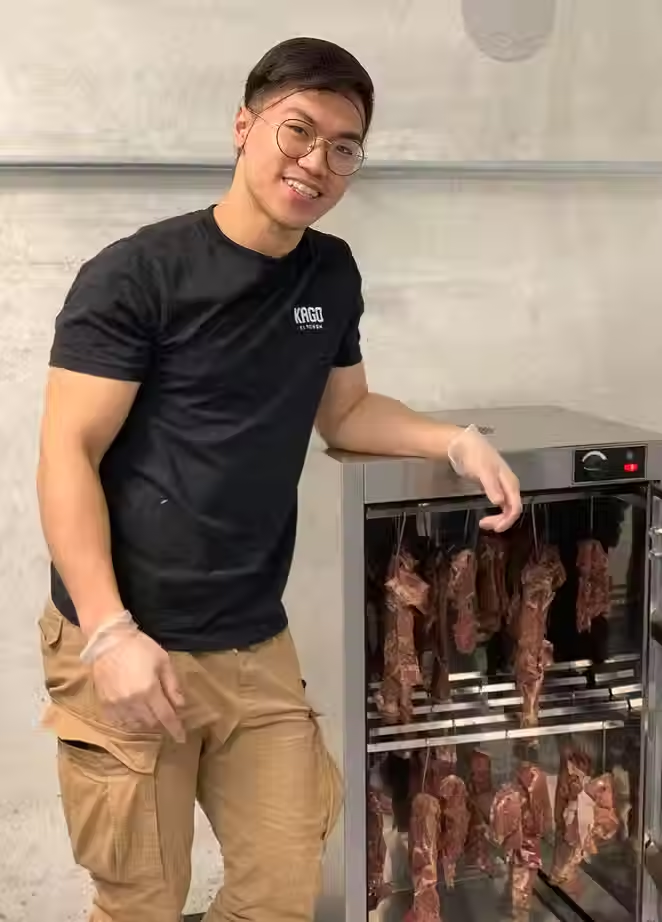
Air-drying early prototypes at a commercial test kitchen to get user feedback
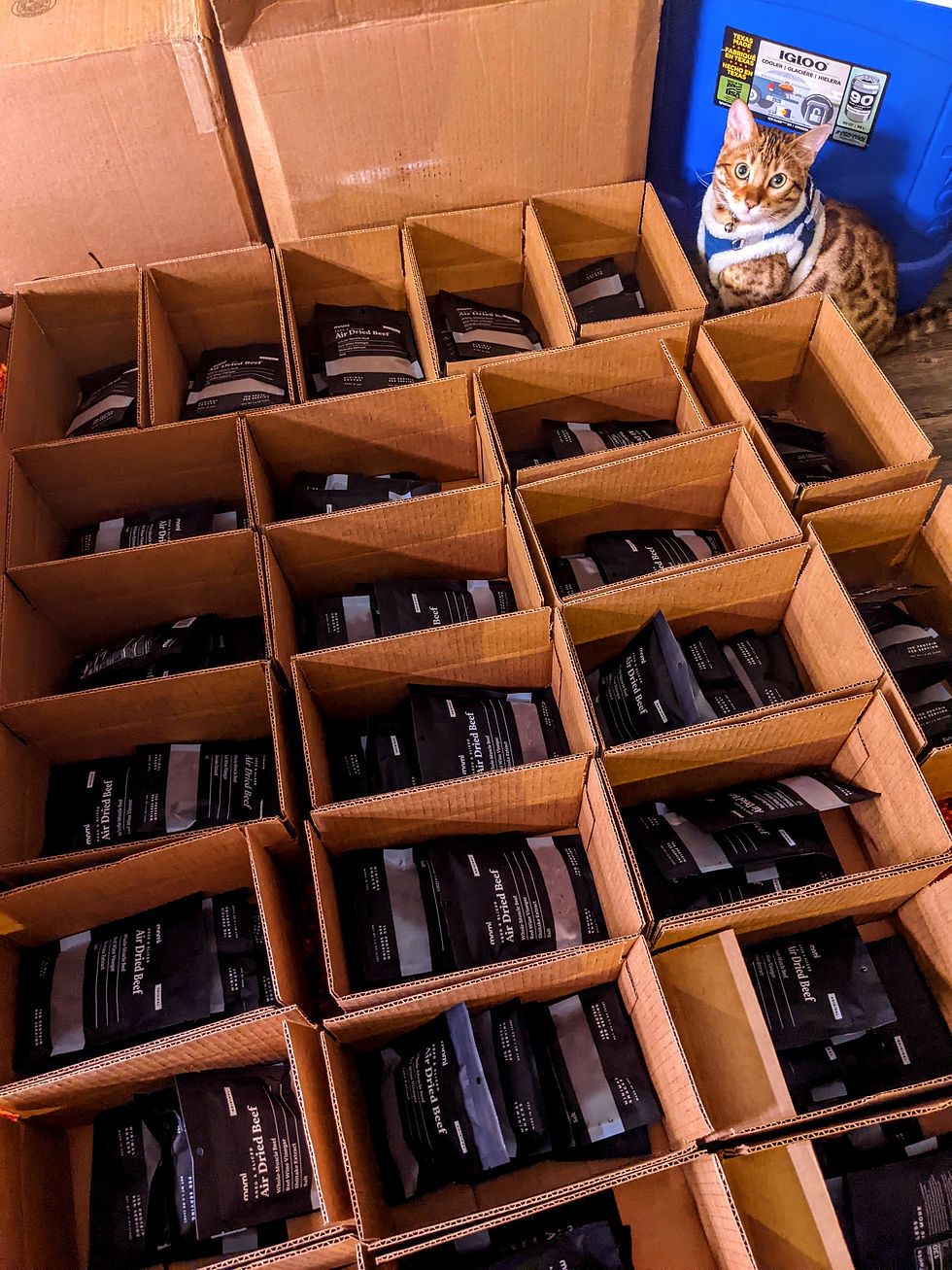
Packing and shipping orders with moral support from Alyosha the cat
Problem
Modern nutrition doesn't resemble real food
Snacks in the grocery store are highly processed and don't resemble anything from the natural world. Even "healthy" protein snacks had way too many irrelevant ingredients.

Just use fewer ingredients. Isn't it obvious?
It's not that easy. Through my test kitchen experiments, I found out how hard it was to create stable, complex flavors out of simple ingredients. If you take out too much, you end up with something bland or shelf-unstable.
Solution
Lactofermentation: the science of bringing ingredients to life. Literally.
Fermentation is a natural method of preservation that creates rich, umami flavors while also producing probiotics. This allowed us to:
-
Deliver complex flavors from simple inputs
-
Keep ingredient lists short
-
Add genuine health benefits for the gut microbiome
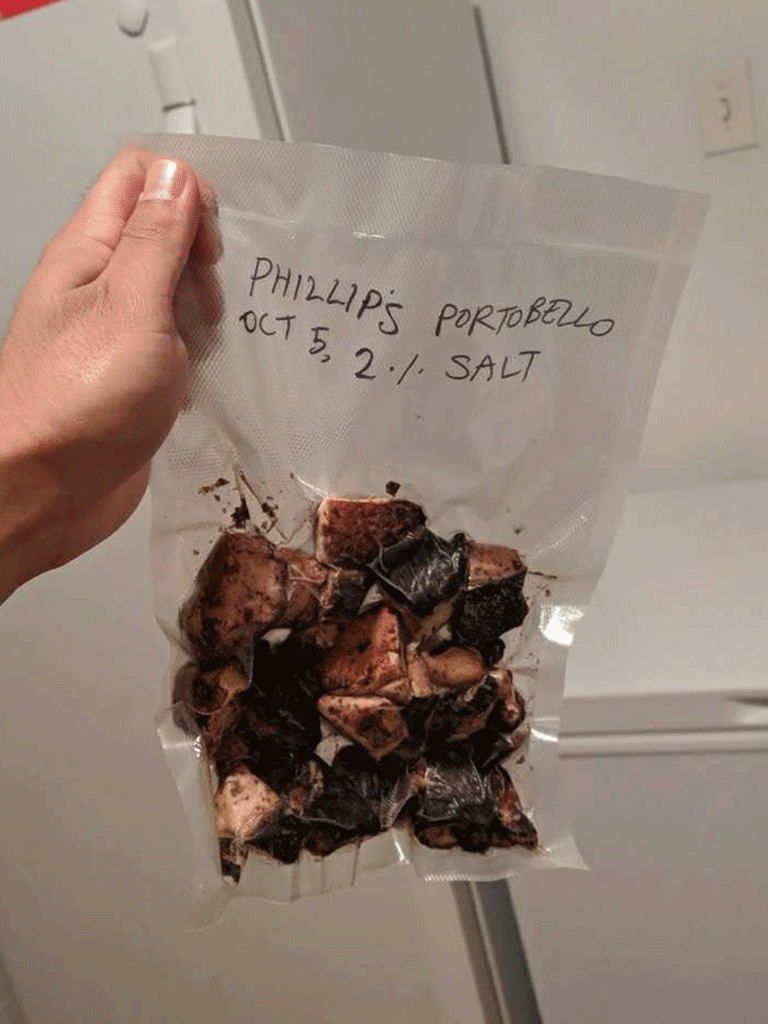
Rapid prototyping: experiments with lactofermented mushrooms
Strategy
We developed a formula that could scale across the entire CPG market

Find a stale product category
We started with beef jerky, but this could be anything from pretzel bites to Greek yogurt.

Remove irrelevant ingredients
Explore ancient methods of food preservation like fermentation, for flavor and shelf stability.

Supercharge and rebrand
Add health extracts from supplement suppliers and rebrand it as a functional superfood snack.
Where To Play
Beef jerky: gas-station vibes, overprocessed, no fresh challenger brands

14g sugar
15 ingredients, including:
“Flavors”, Wheat, Soybeans, Hydrolyzed Corn Protein, Yeast Extract, Maltodextrin, Citric Acid, Pineapple Powder.
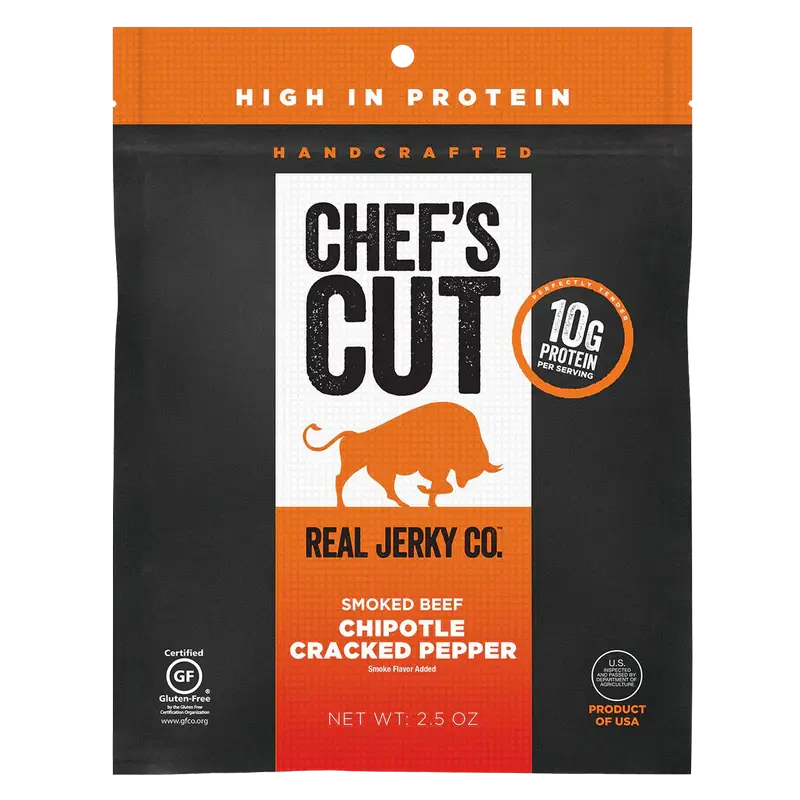
15g sugar
28 ingredients, including:
Hydrolyzed Corn Protein, Hydrolyzed Soy Protein, Caramel Color, “Natural Flavors”, Cultured Dextrose, Lactic Acid, Green Tea Extract, Mustard Oil, Anchovies.


Feasibility
We partnered with Stormberg Foods for USDA approval
While the commercial kitchen worked for test batches and product development, working with a copacker allowed us to manufacture at scale in accordance with USDA guidelines.
Launch
We launched one of the fastest-funded snack Kickstarters of all time
With almost zero marketing spend, we raised $23k+ from 400+ backers.


Hover for sound
Growth
Taking advantage of the momentum: scaling to $105k+ GOV
We used online DTC success as credibility to get into grocery stores and office pantries. Fun fact: Minimal Snacks was stocked in the Meta Chicago office's snack bar!

DTC channels
We set up e-commerce platforms Amazon and Wix to build credibility and proof of demand, which we then took to grocery stores as leverage.

Subscription boxes
Subscription boxes like JerkyGent yielded extremely high conversion rates for us. Customers often came directly to us after discovering Minimal Snacks.

Unique revenue models
We paid for gym advertising in the form of free product, which we required gyms to sell to their members. Gyms would return to us to purchase wholesale after seeing proof of demand.
Staring into the abyss, chewing glass, and enjoying it thoroughly
Lessons Learned
Minimal Snacks was my first attempt at bootstrapping a company myself. In a way, it was a test of my understanding of innovation, and an extended education into viability.
Mistakes made
(not an exhaustive list)
-
Skipping the unsexy stuff: incorporation, trademarks, accounting books—they don't teach that stuff in ENTREP class. I ignored it, and paid for it later. I had to reincorporate and rebrand as Minimal Snacks after messing everything up the first time.
-
Not doing due diligence: I partnered with and gave equity to a classmate I barely knew. A couple months later, he went on a literal cocaine bender and almost burned all of the industry relationships I had built.
-
Ignoring feasibility constraints: I thought we could scale production from a commercial kitchen and breeze through USDA approval with the right consultant. Wrong. We had to scrap everything once I realized that without the capital to build our own factory, copacking was the only feasible option.
-
Rejecting VC money: VCs and angel investors flocked to us when we were having our hockey-stick moment. I said no to all of them. ENTREP classes had me convinced that slow and profitable was the only right way to grow a business.
bottom of page